
A resource for your circle
The money
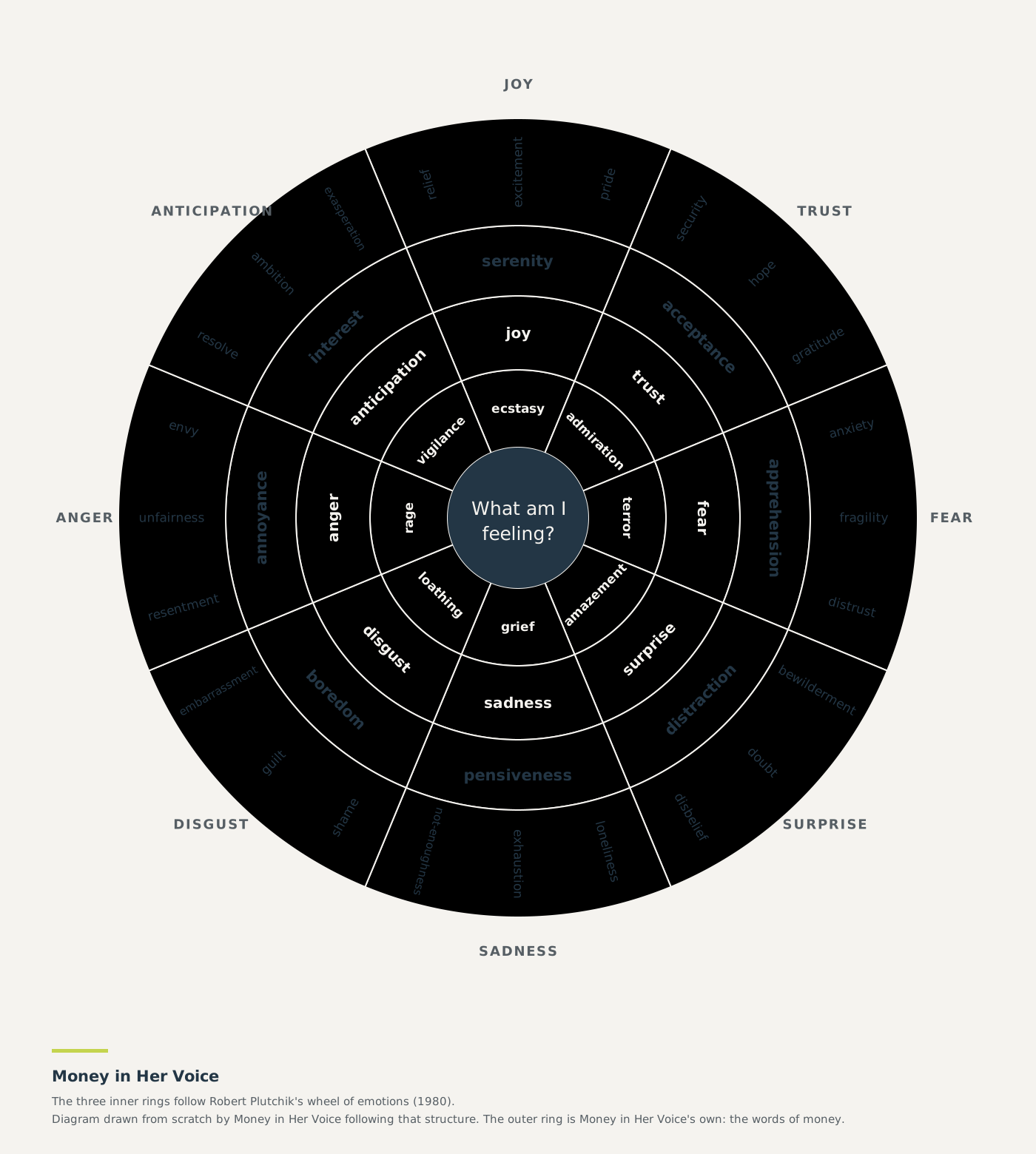
emotions wheel.
«Bad» is not a feeling. «Ashamed» is, and it leads somewhere very different from «angry». The precise word is the one that opens the conversation.
It is used alongside the three-axes sheet, not after it. You start at the center and move outward until you land on the exact word.
You can mark several at once, even contradictory ones: the same situation can bring relief and guilt, sadness and hope. Write both down. The contradiction is not noise: it is almost always the heart of the matter.
How to read it
From the center outward
The center: eight families
Joy, trust, fear, surprise, sadness, disgust, anger and anticipation. Almost everything you feel fits in one of the eight.
The three rings: intensity
The further in, the stronger. Annoyance, anger and rage are the same family in three degrees. Picking the right degree changes the conversation.
The outer ring: money
Shame, guilt, relief, embarrassment, resentment, gratitude, not-enoughness, resolve. These are the words that come up again and again when a woman talks about her money, and no generic wheel has them.
If you cannot find the word
Start with the family: is this closer to fear or to anger? Then go down to the degree: is it annoyance or is it rage? And last, look at the outer ring: there is almost always a more exact word out there than the one inside.
If writing it down made you a little uncomfortable, you got there.
Where it comes from
The three inner rings follow Robert Plutchik's wheel of emotions (1980). Money in Her Voice drew the diagram from scratch following that structure: eight families of emotions and three degrees of intensity. The outer ring is Money in Her Voice's own: the words of money, taken from the vocabulary participants already use on the three-axes sheet.
Updated